Availability varies — call to confirm. · (855) 768-9249
Dormer Roof Leak Repair in the United States
Dormer Leak Clues

United States Dormer Roof Leak Repair Guide

Rain can expose a weak dormer connection, while snow and freeze-thaw weather can stress its roof edges and joints. Heat also expands roofing materials, and cold stiffens them. Wind-driven rain can reach seams that stay dry during calmer showers.

HOMEOWNER PRECAUTIONS

A roofer traces the leak to the dormer’s roof and wall connections, checks the shingles and flashing for openings, then replaces failed materials and any damaged layers. Correctly overlapped flashing helps direct runoff past the joint.

INDOOR LEAK CLUES

How Roof Flashing Controls Water

A damp spot on a stairwell’s upper wall can send you looking for roof leak help.

A damp patch forms where the dormer cheek meets the ceiling.

A brown line at the ceiling corner beside a dormer can point to water getting through the junction between its side wall and roof. Moisture can travel along framing before it appears as a stain, so the mark may sit away from the opening. Ask the roofer to inspect that connection and explain which material has opened.

Paint bubbles on the sloped ceiling below the dormer roof.

A narrow damp line along a dormer cheek wall can point toward a roof edge or joint above that section. The roofer can check how the wall, roof covering, and nearby flashing meet; a line that returns after rain deserves inspection before finishes deteriorate further.

Water beads collect on the dormer window’s inner sill.

Swollen window trim or peeling paint around a dormer window suggests repeated moisture near the frame or an adjoining roof connection. Condensation can also affect trim, so note whether the change follows rainy weather and have the window edge and nearby roof details assessed.

A musty odor lingers inside the dormer’s attic space.

Darkened wood in the attic beside a dormer indicates moisture has reached framing or roof decking. The roofer can use the mark to guide a closer look at the nearby roof plane and dormer joints. Photograph the area from a safe, accessible position if possible.

Insulation feels matted beneath the dormer roof area.

Damp insulation in the dormer cavity can hold moisture after a leak and may begin to affect nearby wood. Have a roofer check the cavity if it is safely accessible, along with the outside joints that protect it; a surface treatment will not correct a wet roof connection.

Why Roof Leaks Return

Dormers interrupt a main roof plane with a smaller roof and raised side walls. Each added edge and connection has to shed water, so houses with different roof layouts can show different leak clues. The roof and attic evidence matters more than a neighborhood label.

This is a national service page. The page explains common signs and repair considerations so homeowners can describe what they see. A ranch, split-level, or subdivision house still needs an inspection of its own dormer design and materials.

City and county pages provide local information for the places they cover; elsewhere, requests use the same referral route. A clear description of the concern helps explain what the inspection needs to address.

Tracing Water Inside the Home

UPPER ROOF
A dormer adds a small roof plane and side walls to the main roof, making several connected edges responsible for shedding water.
CHEEK WALL
The dormer’s upper edge, side joints, and window perimeter are separate places where damaged covering or flashing can admit water.
WINDOW EDGE
Moisture can affect both the roof assembly and finishes around a dormer window.
ATTIC EVIDENCE
A roofer compares indoor and attic evidence with the dormer’s roof details to locate a likely opening before choosing a repair.
REPAIR SCOPE
Photos of the affected room and accessible attic evidence can help document what was visible before repair work begins.
Follow-Up
Rain can expose a weak dormer connection, while snow and freeze-thaw weather can stress its roof edges and joints. Heat also expands roofing materials, and cold stiffens them. Wind-driven rain can reach seams that stay dry during calmer showers.
FOLLOW-UP
an estimated $350–$900

Following a Leak’s Route Through the Roof

Window condensation. Moisture from indoor air can collect on cool glass and frame surfaces, making dormer trim appear damp. A roof leak is more likely when rain-related marks extend onto the cheek wall or ceiling, though inspection is needed to identify the source. Compare the timing and location of the moisture. Moisture from an indoor source may have no consistent link to rainfall. A roofer can assess the surrounding roof connections if the pattern follows wet weather.

Roof Leak Repair Across Different Materials

After narrowing down the entry point, the roofer lifts nearby shingles to expose the dormer connection and checks the flashing laps and roofing layers beneath. They remove failed metal, fit replacement flashing into the shingle courses, and restore the roof covering. Any softened decking found during opening is replaced before the area is closed.

The repair should leave a continuous path for water to drain where the dormer meets the roof covering. They check adjacent wood for damage, then restore the roof layers so they direct water away from the dormer. The scope depends on what the inspection finds.

A repair can often be handled in one call if the source is clear and the affected roof section is accessible. If attic evidence shows moisture in separate areas, or the first correction does not stop water entry, arrange another assessment before considering recurring service.

ADDRESSING DAMAGE OR TRACKING WHAT CHANGES
Repair Approach Contained Roof Repair
One entry point found before broader damageInterior protection
New drips follow completed leak workFlashing condition
Water emerging across distinct roof zonesRoof opening seals and shingle layers reset

Choosing When a Roofer Should Take Over

From indoors, check whether the dormer window casing or nearby wall is swelling, and keep stored items away from damp areas. Avoid painting or caulking over changed surfaces before the leak source is found. If water is actively dripping, use a container only where you can place it safely, then contact a roofer.

Choosing the Right Roof Leak Repair

A leak can make ceilings, insulation, and nearby finishes weak, and water reaching electrical equipment can create a shock risk. Keep people away from a sagging ceiling or wet fixture, and do not touch switches in a damp area. Wet insulation may conceal how far moisture has spread above the room.

Which Materials Affect Roof Leak Repair Expense?

Ask the licensed pros we connect you with to explain how the damaged areas affect the repair plan and what the work will involve.The guide range reflects a roof repair approach supported by inspection findings; it does not price every possible method for addressing the same leak. The amount of repair work depends on what the inspection finds around the leak.See how repair type and roof conditions shape the total in the pricing guide.
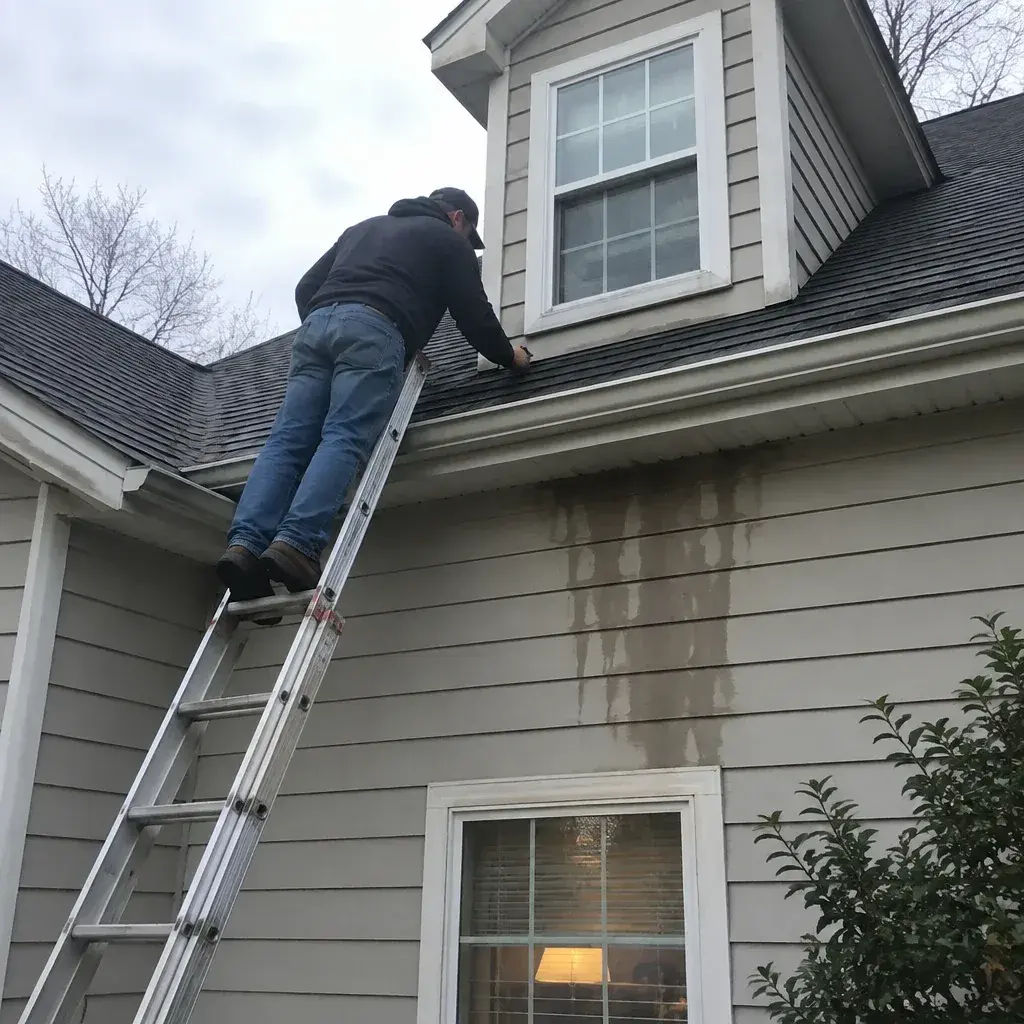
ROOF COMPONENTS

Safe Roof Access Before Leak Repair

Ridge Vent Leak Repair

Ridge vent repair. A roofer traces the water evidence to the ridge, inspects the vent…

Common Leak Concerns

Leak Repair FAQs

Can a dormer leak damage the ceiling or insulation?

A roofer starts with the room and the exact surface showing moisture, then checks the attic area below the dormer if it is safely accessible. From the roof, they examine the dormer’s small roof plane, cheek walls, window edges, and joints where the dormer meets the main roof. Those checks help narrow down the entry point. After identifying damaged covering, flashing, or wood, they explain the repair needed and its scope.

Can a dormer window or cheek wall show where water enters?

The roofer looks for a pattern in the clues: dampness at a window or trim, marks on a cheek wall, or moisture on attic wood beside the dormer. Then they inspect the dormer’s roof covering and the connections along its sides and upper edge. If a damaged section is confirmed, they may lift nearby shingles, replace failed material, and put the surrounding layers back so water drains outward.

What should I tell a roofer about moisture near a dormer?

A roofer starts by checking the dormer from inside for damp framing, then follows the evidence to its roof and wall connections. On the exterior, they examine how shingles meet the cheek walls, whether flashing overlaps correctly, and whether the dormer’s upper and lower edges are intact. They repair the failed material, replace any damaged layers they uncover, and confirm the joints shed water. Ask which connection failed and what the repair will address.

What determines the work needed for a dormer roof leak?

The amount of repair depends on which dormer parts are damaged and how far the moisture has affected nearby materials. A roofer may find a small opening in the roof covering or flashing, or discover that wood or interior trim also needs attention. Water can travel from the roof opening before it becomes visible indoors. The condition of the roof plane, cheek walls, and connected materials shapes the scope.

Start an Inquiry

Not sure how far the leak has spread?

When you call the pros we connect you with, mention where water is showing and whether it appears during certain conditions. Check the visit charge before scheduling. Move furniture and stored items away from damp surfaces before the visit, and leave those surfaces uncovered.

Call (855) 768-9249
Confirm availability, inspection charges, and written scope
Call (855) 768-9249 Schedule Online