Availability varies — call to confirm. · (855) 768-9249
Ridge Vent Leak Repair in the United States
Ridge vent repair

United States Roof Leak Repair for Ridge Vents

Temperature changes can make vent materials and nearby shingles expand or contract, while cold conditions can stiffen some components. After wet or freezing weather, note whether moisture appeared near the peak and ask for the ridge assembly and its ends to be checked.

BUILDING RULES

A roofer traces the water evidence to the ridge, inspects the vent ends, cover, fasteners, and nearby shingles, then repairs the failed parts. The finished assembly should block rain while keeping the attic exhaust passage open.

LEAK INDICATORS

Checking for Leaks from Indoors

A wet upper-wall corner may lead you to look into whether a roof leak needs attention.

A ceiling corner darkens below one ridge-vent end

Water marks concentrated near one end of the ridge vent can point to a failed end closure or debris caught at that junction. Ask the roofer to inspect both ends and check that the repair will leave the vent channel open for exhaust.

Daylight shows through a gap beside the vent

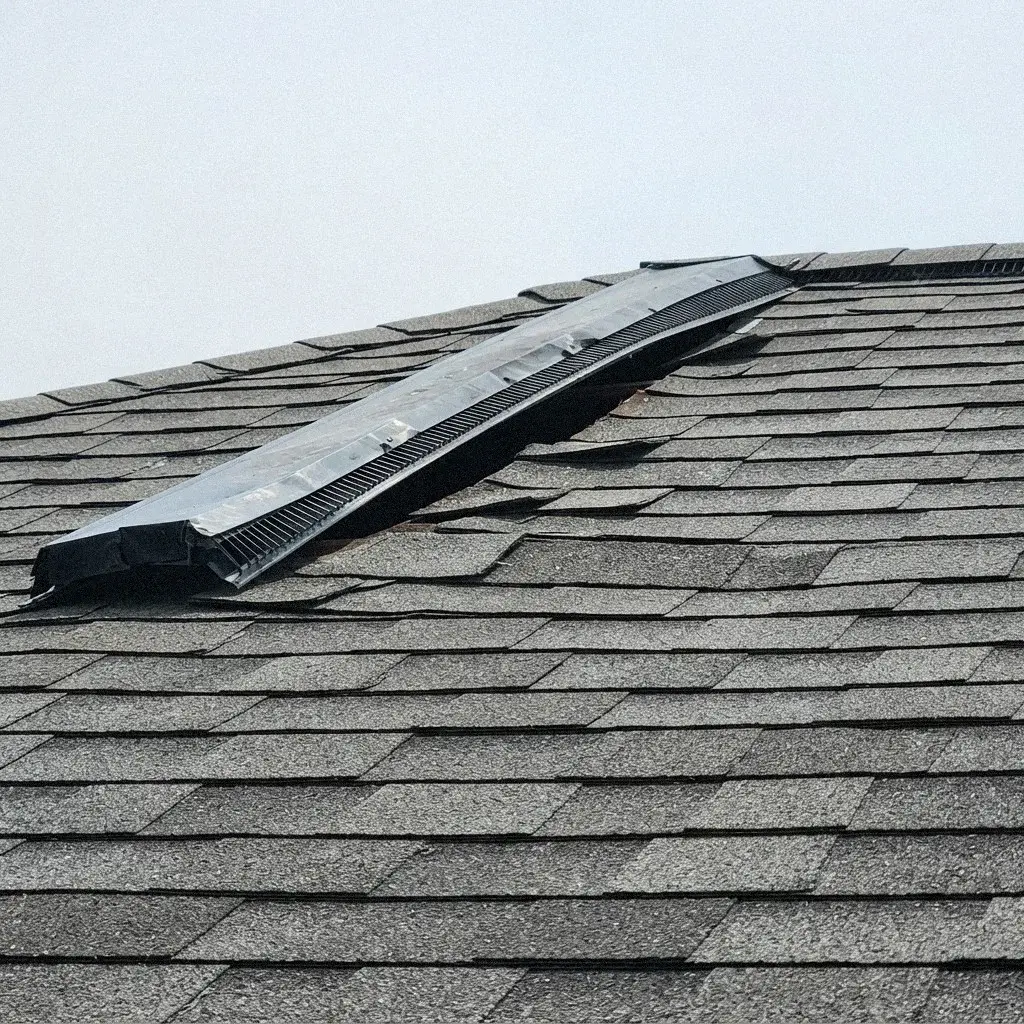
A cover that looks bowed, shifted, or no longer seated evenly may leave part of the vent assembly exposed. From the ground, appearance cannot confirm a leak or show how the parts are fastened. Photograph the visible change from a safe spot and ask the roofer to inspect the attachment and adjoining shingle courses.

Water beads on exposed nail tips beneath the ridge

Damp insulation near the peak suggests moisture has reached the attic, though it does not identify the route it took. Avoid touching wet insulation or moving through an unsafe attic. Tell the roofer where the damp area is in relation to the ridge so the inspection can follow the evidence.

A small puddle forms under the attic peak after rain

A drip near one end of the ridge run can point attention toward the end closure, where the vent assembly terminates. A damaged cap or gap there can provide an entry point. Record which end seems closest to the indoor evidence and ask for that closure and the nearby roofing to be examined.

Fresh streaks cross roof decking beside the vent slots

A damp mark on the attic side of the roof can help focus the inspection. Its presence alone does not show that water entered there. Mention it during the inspection and let the roofer determine whether drainage is affected or a separate defect is allowing water through.

Following Water Through the House

This is a national page for ridge vent leak repair. The licensed pros we connect you with can assess the vent and explain a repair that preserves airflow.

Ranches and split-level homes can place the ridge and attic access in different positions, which affects how a roofer reaches and traces the assembly. The roof layout and vent design guide the inspection, not the house style alone.

A city or county page provides area-specific information, and requests from elsewhere follow the same referral route. The property’s location helps the pros we connect you with check their service area, so share its city and county before discussing a visit.

Finding the Roof Leak Entry

End closure
A stain near the ceiling peak can focus attention on the ridge, but attic evidence helps test that lead.
Vent seating
The vent's end closures and fasteners are separate details that may need inspection.
Deck evidence
Debris beside the vent may affect runoff; it does not confirm water entry.
Air channel
Water reaching attic insulation or framing can leave materials damp before a room shows a drip.
Shingle overlap
A sound repair keeps the ridge protected and leaves the vent's exhaust channel clear.
Service Reach
Temperature changes can make vent materials and nearby shingles expand or contract, while cold conditions can stiffen some components. After wet or freezing weather, note whether moisture appeared near the peak and ask for the ridge assembly and its ends to be checked.
MATERIALS
an estimated $90–$275

Choosing Work for the Roof’s Condition

Ridge cap shingles are solid pieces laid over the peak. Their raised overlap can resemble a vent cover from the ground, but they do not provide the continuous exhaust opening found beneath a ridge vent. A ridge cap protects the seam where the two roof slopes meet. From below, both can look like a raised strip; the continuous vent opening visible from the attic helps distinguish them.

What Guides a Roof Leak Repair Plan

The roofer checks the vent body, end closures, and channel for damage or trapped debris, then identifies the entry point. They replace a damaged vent section or correct its end detail, restoring the roof covering around it. Before finishing, they confirm the repair leaves the ventilation path open.

After locating the failed detail, the roofer refits or replaces the affected vent section, end closure, or attachment and restores disturbed shingles as needed. The work must shield the ridge opening from rain while leaving its exhaust path clear. The roofer can document the completed area and any remaining damage found.

When the inspection points to one reachable roof component and nearby materials are dry, the roofer may be able to correct it on that appointment. Further service is justified when water returns, more than one area is affected, or the route into the house still needs tracing.

WHEN ROOF EVIDENCE SUPPORTS WORK OR ANOTHER CHECK
Interior Impact Leak-Source Fix
One entry point found before broader damageInterior protection
New drips follow completed leak workFlashing condition
Water emerging across distinct roof zonesRoof opening seals and shingle layers reset

Keeping Furnishings Clear of Repair Areas

A photo taken through an upper window can record a ridge vent section that appears lifted or incomplete. Do not lean outside or climb to check it; leave vent removal and roof work to a roofer. If a ceiling is bulging beneath the ridge, keep people clear of that area.

Following Water Through Roof Layers

Water in the attic can dampen insulation and framing, and persistent moisture may damage those materials. Check the ceiling below for discoloration or a new damp patch. Do not enter an attic where the floor or access is wet or unsafe; report what you can see from a dry, stable area.

Does Roof Access Change the Cost of Repair?

Compare the recommended work with the estimate, and ask how the roof materials involved affect the repair approach and expected amount.The guide range reflects a roof repair approach supported by inspection findings; it does not price every possible method for addressing the same leak. The amount of repair work depends on what the inspection finds around the leak.See what can shift a repair estimate in the pricing guide, and how an inspection informs next steps through Shingle Leak Repair.
REPAIR METHODS

Roof Repairs Along Water Drainage Paths

Common Leak Concerns

Leak Repair FAQs

How does a roofer find the leak at a ridge vent?

A roofer starts by checking where water appears indoors, then compares that location with attic evidence and the ridge assembly. The inspection should include the vent ends, cover, attachment points, and the shingle courses beside it. Once the entry detail is identified, the roofer can replace or refit affected vent parts and roofing, then confirm the air channel remains open. Ask for the findings and the specific repair proposed.

Does debris at the ridge vent prove that it is the leak source?

Debris caught against a ridge vent can slow runoff or keep the roof surface damp, so it is one condition to mention during an inspection. Water can enter through a gap at a vent joint even when debris is not blocking runoff. A roofer can check whether the material is affecting drainage and examine the nearby vent edges, ends, and shingles for an actual opening or damaged connection.

Can a repaired ridge vent still let attic air escape?

Yes. The ridge vent needs a continuous passage for attic air to leave, even where the roofer replaces a damaged section. The repair should match the vent system and close the route rain used without blocking its exhaust channel. The adjoining shingles may also need attention if they provide the route water followed.

What can make ridge vent leak work extend beyond the vent?

The work can expand if inspection finds water damage to the roof sheathing, weakened attachment points, or deteriorated shingles beside the vent. A roofer may need to open more of the ridge area to see whether the supporting surface still holds fasteners. The written scope should distinguish the vent correction from any additional roofing or deck work.

Start an Inquiry

Ridge Vent Leak Repair in your home?

Take photos of any staining, bubbling paint, or peeling finish, and keep them ready to review during the inspection. Before picking a visit time, confirm whether the inspection has a charge. Ask them to put their observations and the repair work they recommend in writing.

Call (855) 768-9249
Confirm availability, inspection charges, and written scope
Call (855) 768-9249 Schedule Online