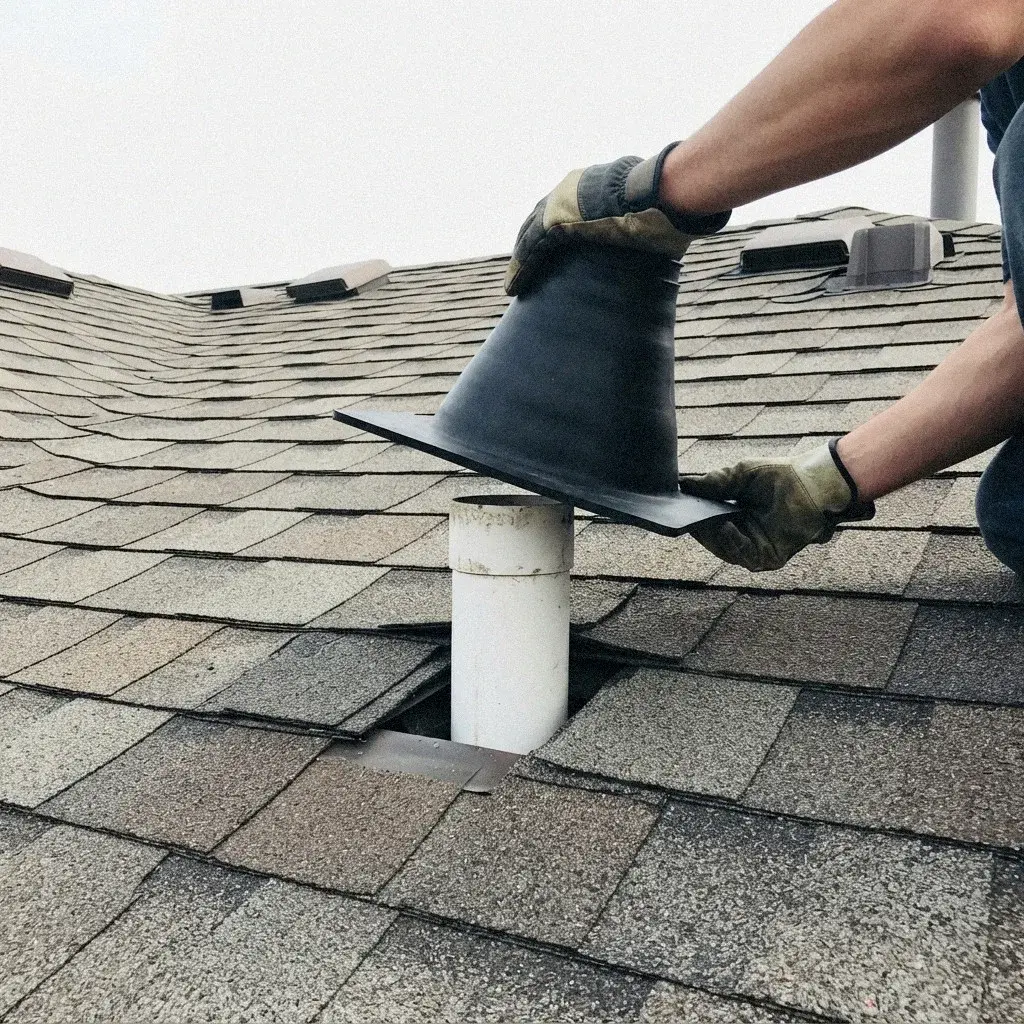
Joints and Openings That Need Sealing
Ranches, split-levels, and subdivision homes all have roof edges, openings, and transitions where components meet. Flashing helps direct water away from those joints; when it is damaged or a gap develops, water can enter. The roof layout helps determine which connections a roofer should examine.
Ranches, split-levels, and subdivision homes can have different roof layouts and attic access. When arranging a visit, share the home style, where the leak appears, and any access limits so the roofer can plan to compare indoor and roof evidence.
Some places have pages of their own; other locations are reached through the same referral. When you contact the pros we connect you with, name the property’s city and county so they can check whether they serve that address.
Checking Roof Materials for Leaks
- WATER PATH
- A stain may remain visible after its source is fixed, so its appearance alone cannot confirm an active leak.
- ATTIC EVIDENCE
- Flashing guides runoff past roof joints and penetrations; a gap or damaged transition can give water a route indoors.
- ROOF CHECK
- The roof area connected to a leak may include a valley, vent boot, seam, or section of covering, depending on the inspection findings.
- TARGETED WORK
- A written note of when dripping starts and stops can help track whether the leak changes.
- WHAT TO SHARE
- Tell an independent roofer where the leak appears and when it returns, plus what you saw in the attic; ask which findings support the repair.
- Service Reach
- Roof parts expand in heat and stiffen in cold. Temperature swings can put stress on joints around penetrations and roof transitions; if a connection opens, water may reach the layers beneath it. A repair should address the failed connection.
- ROOF DESIGN
- an estimated $90–$350
Keeping Interior Belongings Clear of Water
Roof replacement. The inspection should show whether the leak comes from one failure or a wider pattern of roof wear. Ask which evidence justifies the proposed scope. A repair addresses the roof component linked to the leak; replacement covers a wider roof area. Compare the written scope with the inspection findings: it should identify the entry point and explain why the proposed work reaches beyond it, if it does.
How Roof Leak Repairs Address Entry Points
The roofer compares the reported leak with attic trails, then examines the roof area those clues suggest. They may document the condition before work so the completed repair can be compared with it.
Once the likely entry point is established, the roofer repairs the affected component and restores the route that carries water off the roof. They then review nearby layers and attic materials for moisture that may need separate drying or repair.
For a contained failure with no signs of spread, ask whether the repair can be completed during the inspection visit. Ongoing attention is useful when leaks recur or new damp areas appear; it should follow evidence of a continuing issue, not be assumed after one repair.
WHAT ROOF CONDITION MEANS FOR THE NEXT STEP
| Repair Approach |
Contained Roof Repair |
|---|
| A narrow roof issue traced indoors | Material matching |
| Ceiling marks return after roof repair | Roof drainage paths |
| Separate leak points without a clear source | Junction guards and shingle rows repaired |
SOURCE OF WATERPermit rules can depend on where the home is and how much roof work is planned. Ask the local building department whether the proposed repair needs a permit, and have the roof repair contractor describe the work and components addressed in writing.
Interior Effects of Roof Water Intrusion
Repeated wetting can make a room harder to use while materials dry. Those materials may soften or hold moisture after the entry point is repaired, so the work can include drying or interior repairs as well as fixing the roof component.
Keeping Furnishings Clear of Repair Areas
From indoors, record the leak location and timing, and photograph stains from a dry, safe spot. If attic access is safe, note visible water trails without disturbing insulation or materials. Keep clear of wet ceilings and electrical fixtures. Leave roof access and repairs to a roofer with proper equipment.
Leak Repairs Around Electrical Systems
Water near wiring or a light fixture can create an electrical hazard. Avoid touching wet switches, fixtures, or ceiling material, and keep people clear of a sagging area. If water is still entering, move belongings only along a dry, clear path. Tell the roofer about any indoor hazards when arranging the visit.
Does Roof Access Change the Cost of Repair?
Compare the recommended work with the estimate, and ask how the roof materials involved affect the repair approach and expected amount.The guide range reflects a roof repair approach supported by inspection findings; it does not price every possible method for addressing the same leak. The amount of repair work depends on what the inspection finds around the leak.See what can shift a repair estimate in the pricing guide, and how an inspection informs next steps through Leak Inspection.